The Russia-Ukraine war continues to dominate global headlines, and the past 24 hours have brought a series of dramatic developments. With escalating drone attacks, missile strikes, and rising tensions between Russia and NATO, the conflict is entering a dangerous phase that could have consequences far beyond the battlefield. Here is a summary of the latest events, their implications, and what the world is watching next.
Russia’s Overnight Barrage on Ukraine
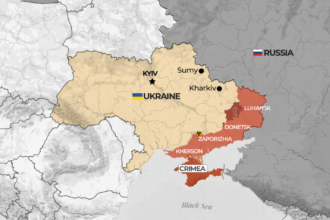
Ukraine reported a major wave of drone and missile attacks across nine regions, including the capital Kyiv, as well as Dnipropetrovsk, Odesa, Kharkiv, Mykolaiv, Zaporizhia, Chernihiv, Poltava, and Sumy. According to officials, dozens of drones and missiles were intercepted, but some managed to strike civilian areas. At least three people were killed, and infrastructure such as power stations and transportation hubs sustained damage.
The scale of these attacks shows that Russia continues to rely heavily on drone warfare and long-range strikes to disrupt Ukrainian defenses and civilian life. While Ukraine has improved its air defense systems with Western support, the sheer volume of incoming threats remains a challenge.
Ukraine Strikes Inside Russia
In response, Ukraine launched its own strikes deep into Russian territory. Reports confirm that Ukrainian drones hit oil refineries in the Samara and Saratov regions. These facilities are vital for Russia’s war effort, as they supply fuel for its military operations. Ukrainian forces also targeted transportation links to slow down the movement of Russian supplies toward the front lines.
These strikes demonstrate Ukraine’s ability to project power beyond its borders and increase pressure on Russia’s economy. For Kyiv, attacking critical infrastructure inside Russia serves both as retaliation and as a signal that the war is not confined to Ukrainian soil.
NATO Alarm Over Russian Airspace Violations
One of the most serious developments is the violation of NATO airspace. Estonia, a member of the alliance, reported that three Russian MiG-31 fighter jets entered its territory and remained for around 12 minutes before leaving. This breach has prompted NATO to convene an emergency meeting of its North Atlantic Council to discuss possible responses.
For NATO, such actions represent a direct challenge to its credibility. The alliance has always emphasized that any attack on a member state will trigger collective defense under Article 5. While this latest incident was not an armed strike, it increases concerns that Russia is testing NATO’s resolve and searching for weak points.
Poland has also raised its defensive alert levels after several Russian drones crossed near its border. These actions add to fears that the conflict could spill over into NATO territory, which would escalate the war dramatically.
Civilian Suffering on Both Sides
Both Ukraine and Russia continue to report civilian casualties. In addition to the deaths from Russian missile strikes in Ukraine, at least two civilians were killed in the Belgorod region of Russia following Ukrainian shelling. In Crimea, a drone attack killed three people and injured several more, according to local authorities.
The humanitarian toll of the conflict is rising, and families on both sides are bearing the brunt of the violence. Millions of Ukrainians remain displaced, and infrastructure damage continues to disrupt essential services such as electricity, water, and healthcare.
Political Reactions and Future Steps
International leaders have expressed deep concern about the latest escalation. Former U.S. President Donald Trump reiterated that America will stand by NATO allies, including Poland and the Baltic states, in the event of further Russian aggression. European leaders have also called for stronger air defenses and greater coordination to address the growing threat of drone warfare.
Meanwhile, discussions within NATO are focusing on whether to take stronger deterrence measures. Options on the table include reinforcing air patrols, deploying additional missile defense systems, and issuing clearer warnings to Moscow that further violations will not be tolerated.
Final Thoughts
The events of the past day highlight the dangerous trajectory of the war. Russia’s ongoing missile and drone campaigns show no sign of slowing, while Ukraine’s deep strikes into Russian territory raise the stakes for both sides. At the same time, NATO finds itself directly challenged, with Russian provocations threatening to widen the conflict.
As the world watches, the key question is whether diplomatic channels can contain the crisis or whether the fighting will spread beyond Ukraine. What is certain is that the conflict has entered a more volatile stage, and the coming weeks will be critical in determining its direction.