In late September 2025, NATO found itself once again at the center of global attention as tensions between Russia and Ukraine continued to intensify. The dates of September 26 and 27 marked an important moment when both political statements and military maneuvers showed how critical the conflict has become not only for Eastern Europe but for international security at large. The alliance has been working to maintain unity, strengthen its eastern flank, and demonstrate to Moscow that its aggression will not be tolerated.
On September 26, NATO Secretary General Mark Rutte reiterated the alliance’s commitment to Ukraine’s defense, stressing that support will continue “for as long as it takes.” His message was clear: NATO does not intend to back down and will keep supplying the necessary assistance, including military equipment, training, and intelligence sharing. At the same time, the North Atlantic Council issued a statement condemning Russia’s reckless actions, emphasizing that the alliance remains strong and united in deterring aggression. Operation Eastern Sentry, launched earlier this month, continues to reinforce NATO’s eastern borders, focusing on air defense and rapid response capabilities.
Russia, however, responded with sharp rhetoric. Foreign Minister Sergey Lavrov accused NATO and the European Union of waging what he called a “real war” against Russia. According to him, the West has gone beyond supporting Ukraine and has entered into direct confrontation. These remarks underline the increasingly hostile tone Moscow has adopted, seeking to frame NATO’s defensive posture as an act of aggression. The Kremlin also rejected recent diplomatic proposals, saying it had “no alternative” but to continue its war efforts.
Meanwhile, NATO members faced a growing problem of airspace violations. In recent days, Russian drones and aircraft have repeatedly crossed into the territory of alliance members, including Poland. Ukraine’s government claims these incursions are part of a deliberate strategy to intimidate NATO countries and pressure them into limiting support for Kyiv. These incidents have triggered quick responses, with NATO fighter jets intercepting Russian aircraft. Still, President Volodymyr Zelensky has criticized the alliance for what he considers a weak response, arguing that unlawful entries should be blocked or shot down immediately to send a stronger signal to Moscow.
Germany has taken a major step in reinforcing NATO’s deterrence posture by deploying its 45th Armored Brigade to Lithuania. This marks the first time since World War II that Germany has stationed a permanent brigade abroad, reflecting the seriousness with which Berlin views the threat. According to German officials, lessons learned from Ukraine’s battlefields have directly influenced their decision, proving that a permanent presence is essential for the alliance’s eastern defense.
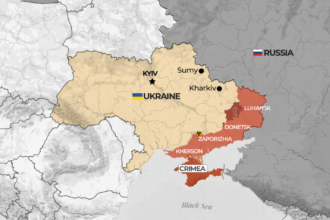
From Ukraine’s perspective, the current Russian offensives have failed to achieve strategic objectives. The Ukrainian military leadership stated on September 26 that Russia’s operations in 2025 did not result in significant territorial gains or a shift in the balance of power. This assessment boosts confidence in Kyiv, but it also highlights the need for continued Western support to sustain momentum. In that light, Zelensky has requested advanced long-range weapons, including Tomahawk missiles from the United States. His argument is that giving Ukraine the ability to strike deeper into Russian territory could push Moscow toward negotiations.
NATO, however, must balance deterrence with escalation management. While allies remain united in supporting Ukraine, there is caution over crossing lines that could lead to a wider confrontation. The recent push by European defense ministers to accelerate the so-called “drone wall” project is a reflection of this balance. By creating a robust defense system against drones and aerial threats, NATO aims to enhance security without resorting immediately to offensive actions.
The days of September 26 and 27 showed a mix of political determination, military adjustments, and strategic communication. NATO wants to project strength while avoiding uncontrolled escalation, whereas Russia continues to frame itself as a victim of Western hostility. What is clear is that the war in Ukraine has evolved into a direct test of NATO’s credibility. With Germany’s new deployment, increased calls for stronger airspace defense, and Ukraine’s push for more advanced weapons, the alliance faces crucial decisions that will shape the future of European security.
In conclusion, the latest NATO updates underline a moment of both danger and opportunity. The danger lies in the growing risk of escalation as Russian drones and aircraft challenge NATO airspace. The opportunity is in strengthening alliance unity, reinforcing the eastern flank, and giving Ukraine the tools to defend itself more effectively. As the conflict continues, the decisions made now will determine not only the outcome of the war but also the stability of Europe for years to come.