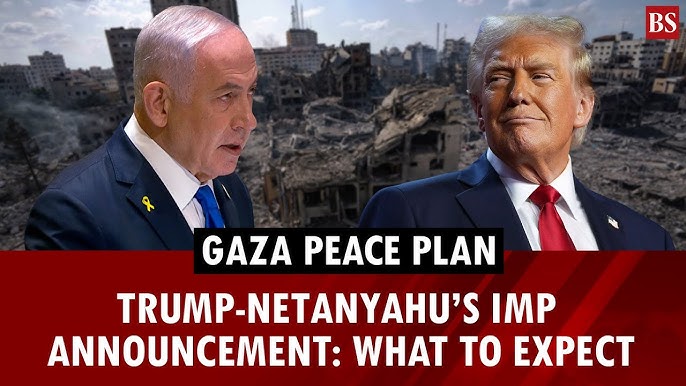
The conflict between Israel and Hamas in Gaza continues to dominate international headlines, with rising casualties, growing humanitarian concerns, and increasing calls for a resolution. Former U.S. President Donald Trump has stepped into the center of this crisis by unveiling a comprehensive peace plan, described as a 20-point roadmap for ending hostilities and setting the stage for long-term stability. While the plan has gained strong backing from Israel and cautious support from key regional powers, it faces significant hurdles as Hamas remains divided on its response.
The Core of Trump’s Proposal
Trump’s peace plan focuses on several key elements designed to stop the fighting and create a transitional period in Gaza. It calls for an immediate ceasefire, the release of all hostages, and a phased withdrawal of Israeli forces. The plan also requires Hamas to disarm, allowing an international body to take over governance in Gaza temporarily. Trump’s vision includes a major reconstruction effort, international funding for rebuilding infrastructure, and eventual steps toward political stability.
Importantly, Trump has made clear that if Hamas fails to comply, Israel will have U.S. backing to continue its military operations. This tough stance is meant to pressure Hamas while giving Israel assurances of strong American support.
Israel’s Support and Coordination
Prime Minister Benjamin Netanyahu has strongly endorsed the plan, aligning Israel’s strategy with Trump’s proposals. Reports suggest that Israel and the United States have coordinated a joint ceasefire framework that reflects most of Trump’s 20-point plan. Israel’s leadership insists that Hamas must be dismantled militarily but has shown some openness to allowing certain operatives to leave Gaza peacefully if this helps secure long-term stability.
Netanyahu has stressed that while Israel’s goal remains the elimination of Hamas’s military power, the plan could provide a pathway to peace if Hamas agrees to the terms.
Hamas’s Divided Response
Hamas has not yet issued a unified response to the proposal. Its political wing has signaled a possible acceptance with amendments, seeking changes related to disarmament and the governance of Gaza. However, its military wing has rejected the plan outright, calling it a tool designed to strip Hamas of power and undermine its role in Palestinian society.
Mediators from Egypt and Qatar are actively working to bridge these differences and encourage Hamas to agree to a modified version of the deal. This highlights the complex internal divisions within Hamas and the challenges of reaching a consensus.
Humanitarian Situation Worsens
Even as diplomatic talks continue, violence in Gaza has intensified. Recent Israeli airstrikes and ground operations have killed dozens, including civilians and medical workers. Gaza’s health ministry reports that the death toll has now exceeded 66,000, with massive displacement and destruction of infrastructure. Humanitarian organizations warn that the territory faces severe shortages of food, medicine, and shelter, raising fears of famine.
Attempts by international aid flotillas to deliver supplies have been blocked, adding to the suffering of civilians and fueling global criticism.
International Reactions
Trump’s plan has drawn both praise and skepticism abroad. The White House has promoted it as a bold and historic step, with support from several Middle Eastern nations including Egypt, Qatar, Saudi Arabia, and the UAE. France and Saudi Arabia, while outwardly supportive, have privately expressed concerns that the plan lacks a clear path to Palestinian statehood and excludes the Palestinian Authority from any future governance role.
Despite these doubts, Trump has emphasized that negotiations with regional partners are ongoing and that the international community is increasingly rallying behind his initiative.
What Lies Ahead
The future of Gaza remains uncertain. If Hamas rejects the plan, Israel is expected to resume large-scale military operations with U.S. backing. If a modified version is accepted, Gaza could move toward a transitional phase under international governance, followed by reconstruction and eventual steps toward self-rule.
The stakes are high for all sides. For Israel, the plan offers the chance to weaken Hamas while securing global support. For Palestinians, it presents both risks and opportunities, depending on whether their demands for sovereignty and governance are eventually addressed. For Trump, success would position him as a key peacemaker on the global stage, while failure could fuel further instability.
In the end, the path to peace will depend on whether all parties are willing to compromise. The coming weeks will be critical in determining whether this plan marks the beginning of a resolution or just another chapter in a long and painful conflict.